About the Project
Feminist Ageing Futures in Datafied Worlds is an Elisabeth List Fellowship project at the University of Graz, also supported by Smart Regulation. The project builds on previous collaborations between senior researchers Juliane Jarke and Helen Manchester exploring participatory futuring and critical anticipatory practices in the context of ageing. Feminist Ageing Futures focuses more explicitly on the experiences of older women and brings in arts-based research approaches via the practices of artists and junior researchers Steve Symons and Ren Aldridge.
Our project uses participatory arts-based methods to explore questions around datafied futures as they relate to the lives and (perceived) vulnerabilities of older women. This takes place through a series of 6 creative workshops with a local group of women over the age of 60 at < rotor > gallery in Graz. During the workshops, we use various creative approaches to explore their experiences of ageing and their ideas about the future. We are using the theme of ‘Monsters’ to help us think imaginatively about ageing, vulnerability and technology, drawing on a wide range of theory, from Lauren Elkin’s book ‘Art Monsters: Unruly Bodies in Feminist Art’ to Margrit Schildrick’s ‘Embodying the Monster: Encounters with the Vulnerable Self’. Together with the participants, we want to develop ways to imagine alternative future scenarios that focus on care and community, justice and inclusion. The results of these workshops will be displayed in an exhibition as well as through talks, publications and a symposium in Graz.
We held the first two workshops in February. It was a joy to meet our participants and begin our work together in the welcoming atmosphere of < rotor > gallery. During the first workshop, we invited everyone to introduce themselves through an object that they could not imagine ageing without. The response was really creative ranging from paint brushes, ceramics and cameras to much loathed though necessary mobile phones.
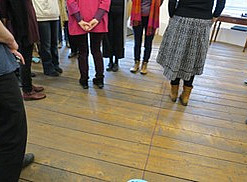
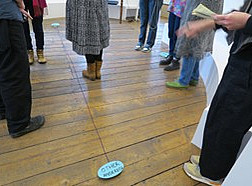
Our next activity was the futures quadrant activity, which is designed to elicit a range of thoughts, positions and emotions about possible futures. Helen had placed two axes on the <rotor> foyer floor. In one direct lay "self" to "other" (both other people and things) and across this lay the certain/uncertain axis. Assured that there were no right answers, participants were invited to think about how they felt about the future and placed themselves within the different quadrants that best fitted their current outlook. We then discussed why people stood where they had, how the position might change or what change in perspective might place them elsewhere.
Our final activity introduced the theme of monsters; being monstered/othered and how people create monsters of themselves and others, why and how can we claim the idea of being other/monstered to empower ourselves.
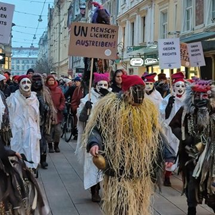
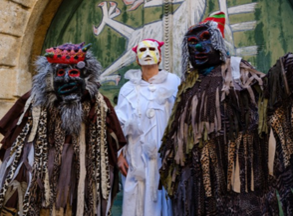
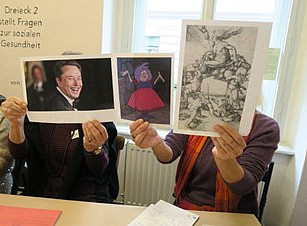
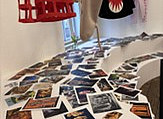
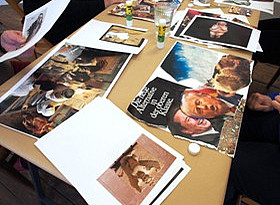
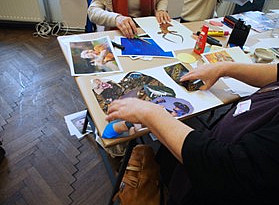
The activity started with the participants returning to the main table after the last activity, to find a wide range of monster images had been spread out. Ren then gave a quick slide show presentation exploring different ways of thinking about monsters in relation to othering, ageing bodies, invisibility, vulnerabilities and ambivalences. We were also very much inspired by the feminist Perchtenlauf that was recently organised in Graz by Omas Gegen Rechts (Grannies Against the Right). They repurposed the alpine tradition of chasing out the winter, to chase out racism, misogyny and other forms of discrimination. This very much resonated with the monster theme and values of our project!
Photo by Zoe Ebner/Toni Teichmann
Photo by Zoe Ebner/Toni Teichmann
The participants were invited to select an image and then discuss in small groups how this image represented monstering to them. Finally groups presented a summary of their discussions.
Workshop 2
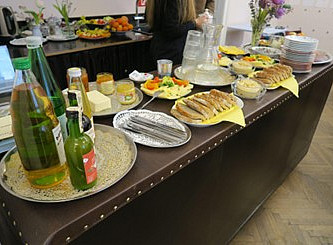
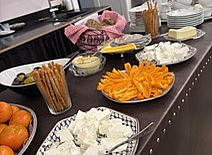
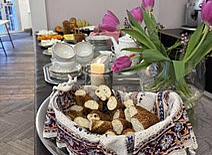
Our second workshop was less than a week later. < rotor > once again provided beautiful catering, this time with turkish bread, olives, peppers, cheese, spreads and fruit, as well as tea and coffee. As the participants arrived, the < rotor > team made sure everyone had a hot drink and we gathered around the tables in the meeting room.
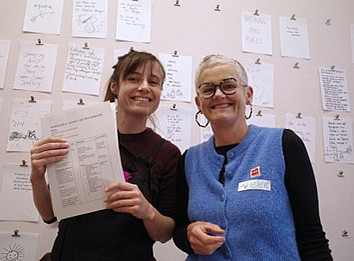
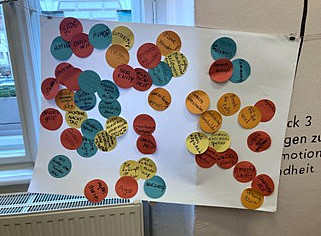
We began the workshop by collecting words and themes in relation to the previous workshop. These were written in both German and English on post-it notes and collectively organised into clusters.
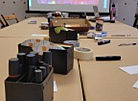
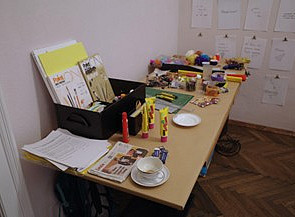
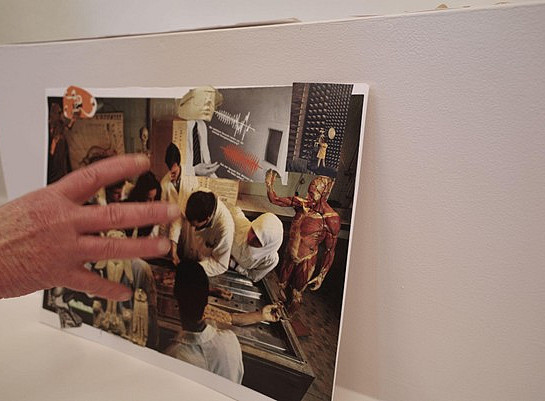
The main activity for this workshop was collage-making. We prepared various craft materials, including some electronic components, and a huge pile of images including the monster images from the previous workshop as well as images of Goddesses, technology, nature and older women. The task was to combine images you felt drawn to in order to explore the connections between the project themes: ageing, women, futures and technology.
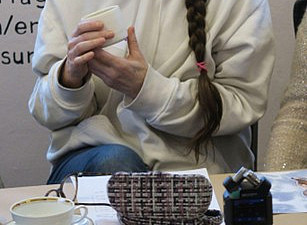
We were surprised by how quiet everyone was as they focussed on making collages – we chatted a little but mostly everyone was absorbed in their work. We ended up joining in and making our own! Once they were finished, the participants took their collages to a private space that Steve had set up where they could film their collages and explain their process.
Once everyone had finished and had a break, we gathered around to look at everyone’s collages and a couple of the participants shared their process with the group. It was interesting to see how certain images related to their personal experiences and drew out unique connections between the themes.
For the final half hour or so we regrouped in the meeting room to discuss the Ursula Le Guin text that they read in between the workshops. Many of the participants seemed to really relate to the text and it was an insightful and generative discussion. The final quick activity was to take a few minutes to write about a moment (or a few moments) that resonated with us.
What’s next?
We are now preparing for the remaining four workshops in April and June, as well as an excursion to Leichter Leben Raum in March. We will be presenting the project at the Anticipation conference in Milan in July and are in the process of applying for a number of other academic conferences.